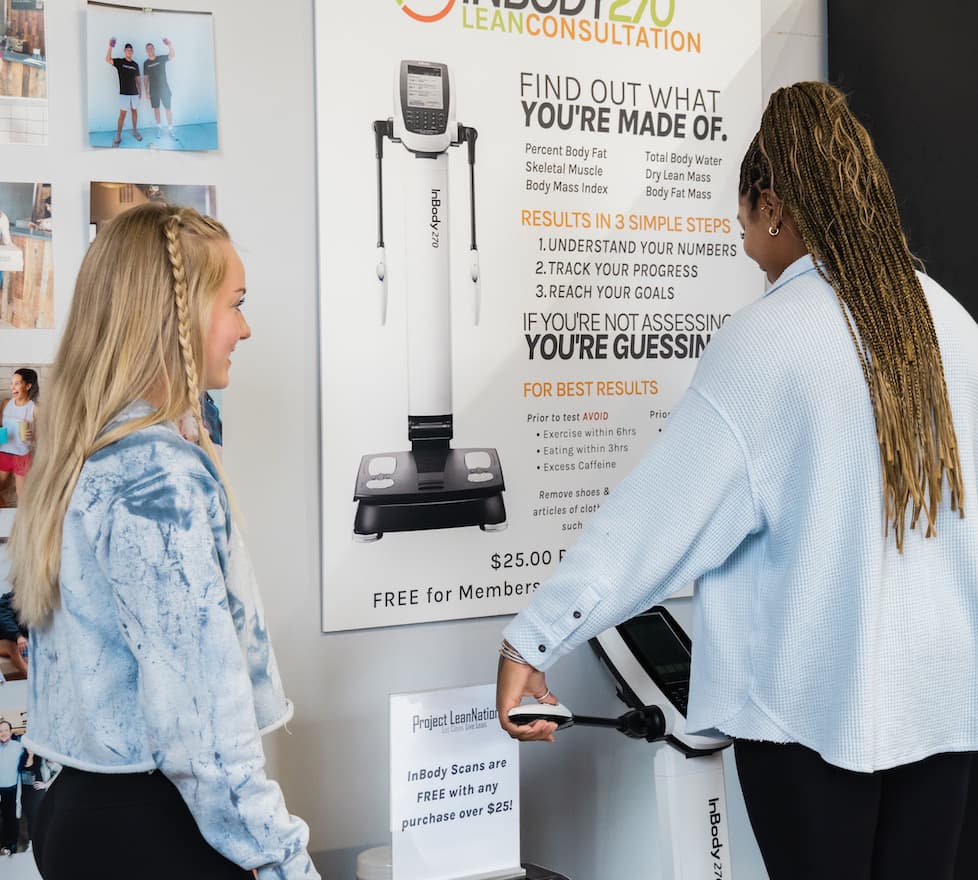
A bathroom scale reports one number, and that number is several different things added together. An InBody scan separates them. That is the entire difference, and it is a bigger one than it sounds.
What does a bathroom scale actually tell you?
Your total weight. That figure includes muscle, fat, bone, organs and water, with no way to tell which of them moved when the number changes.
This is why the scale can be actively misleading over short periods. Body water alone shifts with hydration, sodium, sleep, and where you are in your cycle. A two pound swing overnight is almost never two pounds of tissue, but the scale cannot say that, so people read it as failure and change course for no reason.
What does an InBody scan measure?
An InBody device uses bioelectrical impedance, meaning it sends a small, imperceptible electrical current through the body and measures the resistance it meets. Different tissues resist that current differently, which is what lets the device estimate how your weight divides up.
The output separates your weight into components rather than reporting one total. The ones people find most useful are:
- Skeletal muscle mass. The muscle you can actually influence through training and protein intake.
- Body fat mass. Reported as a quantity rather than only as a percentage, which matters because a percentage moves when either number changes.
- Total body water. Often the explanation for a confusing week on the scale.
Because it reports these separately, the scan can show two things moving in opposite directions at the same time. That is the situation a scale reports as "nothing happened."
Why does that distinction matter in practice?
Because the most common point at which people quit is a few weeks in, when the scale has barely moved. If muscle has increased while fat has decreased, total weight can stay almost flat while your body composition has changed meaningfully. A scale shows a flat line. A scan shows two lines going in the directions you wanted.
The reverse is also worth knowing. Weight can fall in a way that is not what someone intended. Seeing the components separately is how you catch that early rather than months later.
How accurate is it?
Bioelectrical impedance is an estimate, not a laboratory measurement. Hydration, recent eating, and recent exercise all affect a reading. It is not a medical diagnostic and it does not replace anything a clinician would do.
What it is good at is consistency. Taken under similar conditions each time, it tracks direction and rate of change reliably, and direction is what you actually need. The useful discipline is to scan under comparable conditions, roughly the same time of day and in a similar state, and to read the trend across several scans rather than reacting to any single one.
How often is worth scanning?
Often enough to see a trend, rarely enough that normal fluctuation does not look like a signal. For most people that is every few weeks rather than every few days. Scanning daily reproduces exactly the problem the scale created.
At Project LeanNation an InBody scan is included with membership, and the point of it is the conversation afterwards rather than the printout. A number you cannot interpret is not more useful than the scale was. A number someone walks you through is.
More on how InBody scans work at Project LeanNation, or find a Charlotte location.