The honest answer to "how much does meal prep cost?" is that the sticker price often compares very different products as if they were interchangeable.
Before any number means much, you need to know what is behind it.
Two prepared meals can look nearly identical and still differ significantly in portion size, protein, ingredients, delivery fees, sourcing, flexibility and what is included beyond the food itself.
So the better question is not simply, "What does one meal cost?"
It is, "What am I actually getting for that price?"
What actually drives the price of a prepared meal?
Several things contribute to the final number.
- Ingredients and sourcing. Protein choices, produce, sauces, cooking oils and ingredient standards all affect food cost. Two meals with the same calorie count can be built from very different ingredients.
- Portion size and macros. A larger meal or one containing more protein may naturally cost more to produce than a smaller meal built primarily around lower-cost ingredients. Comparing prices without comparing what is actually in the tray can be misleading.
- Labor and preparation. Cooking, portioning, packaging and quality control all contribute to the cost of a prepared meal.
- Packaging and logistics. Shipped meals may require insulated boxes, refrigerants and parcel shipping. Local models may use simpler packaging while supporting pickup or shorter-distance delivery.
- Service and support. Some companies sell prepared food and stop there. Others include access to coaches, physical locations, body-composition tracking or other services.
Every company balances those costs differently.
That is why the lowest advertised meal price does not automatically represent the lowest total cost or the best value.
Does local meal prep cost more than a shipped subscription?
Not necessarily.
That assumption sounds intuitive, but the economics work in both directions.
National meal companies can gain efficiencies through large production volume, but they also carry costs for insulated packaging, refrigerants, parcel shipping, fulfillment and customer acquisition.
Local prepared-meal businesses have their own operating costs, including storefronts and local teams, but may avoid some of the expenses associated with shipping individual refrigerated boxes across the country.
The result is that pricing across the prepared-meal category can overlap considerably.
A national service is not automatically cheaper because it is national, and a local storefront is not automatically more expensive because it has a physical location.
You have to compare the actual offers.
What is actually included in the price?
This is where a simple price-per-meal comparison starts to break down.
One company may quote a low introductory meal price but require a minimum order, charge shipping separately or increase the price after the promotional period ends.
Another may have a similar regular meal price while including access to services beyond the food.
Project LeanNation is built around that broader model.
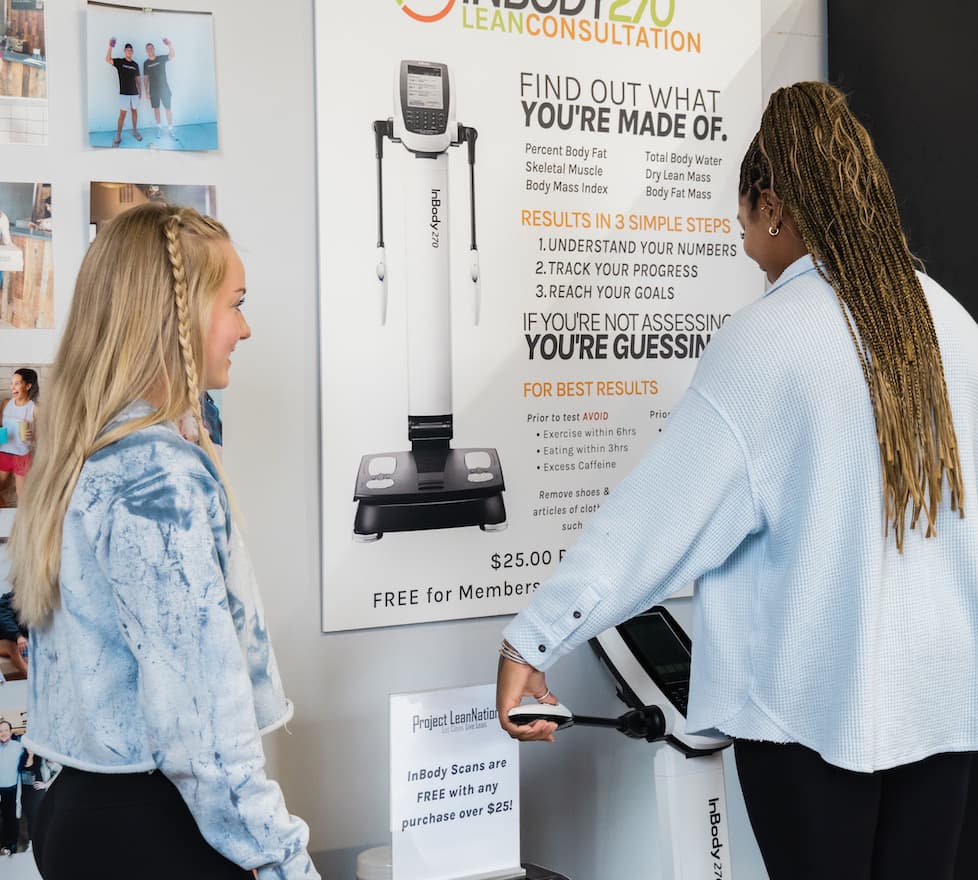
You can get chef-prepared, macro-tracked meals while also having access through PLN+ to one-on-one coaching and InBody body-composition scans.
Those services do not turn Project LeanNation into a premium-priced alternative to prepared meal delivery.
They are part of what makes the value proposition different while PLN remains competitively priced within the category.
How should you compare two meal-prep services?
Start with the total amount you will actually pay.
Then compare what you receive for it.
Compare the food itself. Look at portion size, protein, ingredients and nutrition information rather than assuming every tray represents the same amount of food.
Check the real recurring price. Introductory discounts can make almost any service look inexpensive for the first few weeks. Compare what you will pay once the promotion ends, including delivery or shipping fees.
Look at ingredient standards. If things like gluten-free ingredients, seed oils or protein sourcing matter to you, include those standards in the comparison rather than looking only at calories and price.
Consider what happens beyond the meal. Ask whether you are buying food alone or whether coaching, progress tracking, local support or other services are part of the experience.
Compare flexibility. Minimum orders, skip policies, pickup options and delivery requirements all affect the real value of a service.
The goal is not to justify paying more.
It is to make sure you are comparing equivalent products before deciding which one costs less.
Where does Project LeanNation land?
Project LeanNation sits within the prepared-meal category as a competitively priced option with more built around the food.
Meals are chef-prepared and macro-tracked, made with gluten-free ingredients and without seed oils, and available in two portion sizes.
Customers can also purchase individual Grab & Go meals without committing to a weekly plan.
For members who want more structure, PLN+ adds one-on-one coaching and InBody body-composition tracking through a local store.
That means the comparison is not:
cheap national meals versus expensive local meals.
It is:
prepared meals from different companies, at different price points, with different ingredients, portions, fees and levels of support.
Project LeanNation competes on the meal price too. The coaching, scans and local team are additional reasons to choose it, not an explanation for why it supposedly costs more.
What is the best way to judge value?
Ask what you are actually trying to solve.
If you only want the lowest possible cost per calorie, evaluate services on that basis.
If you care about protein, portion size, ingredient standards, convenience and support, include those in the calculation too.
A meal that costs a little less but does not fit your goals is not automatically better value.
A meal that includes features you never use is not automatically better either.
The best value is the option that gives you what matters to you at a price you can consistently maintain.
A note on pricing
Prepared-meal pricing changes frequently based on promotions, order size, market and delivery method.
Project LeanNation pricing can also vary by location, which is why this article does not quote one national price and pretend it applies everywhere.
For a useful comparison, look at the current regular price, portion size, nutrition, delivery fees and included services for the specific options available in your market.
See Project LeanNation's Atlanta-area stores for current options in Intown, Cumberland and Alpharetta.