Most people on a GLP-1 are not under-eating protein because they decided to. They are under-eating it because they are under-eating everything. Appetite goes quiet, total intake falls, and protein falls with it — quietly, proportionally, without anyone noticing until months later.
This article gives you the actual ranges, the reasoning behind them, and a practical way to hit a target when food has stopped being interesting. It is general nutrition information, not medical advice, and your prescriber is the right person to talk to about anything specific to your health.
How much protein do people on a GLP-1 generally need?
For adults losing weight, the nutrition literature broadly supports a range of roughly 1.2 to 1.6 grams of protein per kilogram of body weight per day — about 0.55 to 0.73 grams per pound. People doing regular resistance training while in a calorie deficit often sit at the higher end of that range or somewhat above it.
In practical numbers, a person weighing 150 pounds lands somewhere around 82 to 109 grams per day. At 180 pounds, roughly 98 to 131 grams. At 220 pounds, roughly 120 to 160 grams.
Those are starting ranges for a general adult population, not a prescription for any individual. Body composition, activity, age, kidney health, and other medical conditions all move the number, which is why an individual target is a conversation with a healthcare professional rather than something to take from an article.
Why the number on the label is not the right starting point
The Recommended Dietary Allowance for protein is 0.8 grams per kilogram. That figure is widely misread. It was set as the amount sufficient to prevent deficiency in most sedentary adults — a floor, not a target, and not a number derived from anyone trying to hold onto muscle while losing weight.
Anyone losing weight is asking their body to do something harder than maintenance. The relevant question is not how little protein you can get away with. It is how much supports keeping the tissue you want to keep.
What moves your number up or down?
Several things push toward the higher end of the range:
- Resistance training. If you are lifting, your protein requirement is higher, and the training itself is the other half of the muscle-preservation equation.
- Age. Older adults generally need more protein per kilogram to get the same muscle-building response — a phenomenon researchers call anabolic resistance.
- A larger calorie deficit. The steeper the deficit, the more protein matters.
- More lean mass to begin with. More muscle takes more protein to maintain.
Conditions affecting the kidneys or liver can move the number in the other direction. That is a medical conversation, not a nutrition one.
How do you hit a protein target when you are not hungry?
This is the real problem, and it is a structural one rather than a willpower one. When total food volume drops, every bite has to carry more.
Four things that tend to work:
- Eat protein first. If you are only going to finish half a plate, make the half you finish the protein. This single habit closes most of the gap for most people.
- Spread it across the day. Aiming for roughly 25 to 35 grams per eating occasion across three or four occasions is more achievable than two large protein-heavy meals when your appetite is suppressed.
- Choose moist over dry. Dry chicken breast is one of the hardest foods to finish when you have no appetite. Braised thigh, fish, eggs, Greek yogurt, and cottage cheese go down far more easily for the same protein.
- Use liquid protein when solid food is unappealing. A shake is not a compromise on a day when nothing solid appeals. It is the difference between hitting your protein and not.
How do you know whether you are actually getting enough?
The honest answer is that the scale cannot tell you. Weight going down says nothing about what the weight was made of.
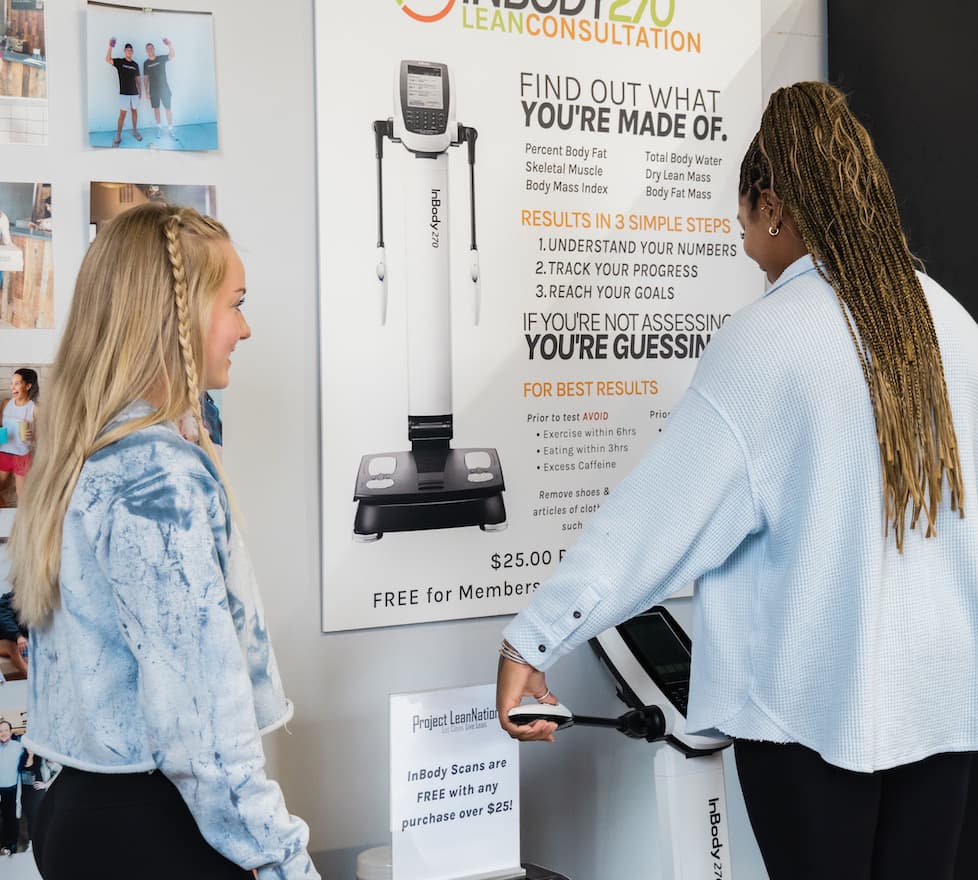
Body composition measurement — which separates weight into muscle, fat, and water — is what answers the question. If lean mass is holding steady while total weight falls, the plan is working. If lean mass is falling alongside it, protein and resistance training are the two levers to look at first.
Tracking intake for a week is also more revealing than most people expect. Most people on a GLP-1 who assume they are getting enough protein discover they are roughly 30 to 40 grams short of where they thought.
Where Project LeanNation fits
Project LeanNation is a nutrition retailer offering macro-tracked prepared meals, coaching, and InBody body composition scanning. Project LeanNation does not prescribe or supply GLP-1 medications. What it handles is the nutrition side: meals portioned to a known protein target so hitting the number does not require weighing anything, a coach who reviews where you actually are, and body composition scanning rather than a scale.
For people on a GLP-1, the meals tend to matter less than the structure around them. Knowing exactly how much protein is in front of you removes the guesswork on the days when eating is the last thing you want to do.
This article is general nutrition information and is not medical advice. Project LeanNation is not a medical provider. Decisions about your medication, dosing, or individual nutrition needs should be made with your healthcare provider.