"Custom meal prep" gets used for several very different products, and they are not interchangeable.
Before you search for the "most customizable" option, it helps to know which kind of customization you actually need. Otherwise, you can end up paying for flexibility you do not use or choosing a service that cannot actually do what you assumed it could.
What does "custom meal prep" actually mean?
Usually, one or more of these four things:
- Fully bespoke cooking. A private chef or boutique service builds meals around your individual requirements, with dishes created specifically for you. This offers the greatest control because the menu itself can be designed around the individual.
- A flexible or filterable menu. You choose from an existing selection of meals based on preferences, nutrition information, ingredients or dietary needs. You are selecting from what the kitchen already makes rather than commissioning a completely new dish.
- Portion-size customization. The same general meal is offered in different portion sizes so you can choose an amount that better matches your appetite, goals or activity level.
- Swaps and substitutions. A base meal allows certain changes, such as choosing a different side, removing an ingredient or adding extra protein.
All four can legitimately be described as customization. They simply give you control over different parts of the meal.
Why does this distinction matter?
Because "custom" by itself does not tell you what you can actually change.
Someone looking for complete control over every ingredient needs something very different from someone who simply wants to choose meals that fit their nutrition goals.
A service can offer plenty of flexibility without functioning like a private chef.
The useful question is not, "Is this customized?"
It is, "What exactly can I customize?"
Does more customization always cost more?
Not necessarily.
Pricing depends on much more than the amount of customization available, including ingredients, portion size, production model, order volume, delivery, packaging and what else is included with the service.
Fully bespoke cooking usually operates under a very different model because meals may be planned and prepared specifically for one person or household.
Prepared-meal services can offer meaningful choice while still producing meals efficiently at scale.
That means a flexible menu or multiple portion sizes do not automatically make a service expensive. They are simply different ways of giving customers more control while keeping the meal-prep model practical.
When comparing options, look at the actual recurring price and what you receive rather than assuming that one style of customization must cost more than another.
How do you work out which kind of customization you actually need?
Three questions usually narrow it down quickly.
Do you have a food allergy or medical condition that requires strict control over ingredients? That requires more scrutiny than a general "customizable" claim. Review ingredient information carefully, ask about preparation and cross-contact, and do not assume a menu filter alone makes a meal appropriate for a diagnosed allergy or condition.
Are you trying to hit a particular nutrition or macro goal? You may not need a completely bespoke menu. Clearly labeled nutrition information, multiple portion sizes and guidance on what fits your plan may give you the flexibility you actually need.
Do you mainly want healthy food you will enjoy without cooking it yourself? A varied prepared-meal menu may be enough. Being able to choose the meals you want each week is itself a useful form of customization.
The goal is not maximum customization.
It is the right customization for the problem you are trying to solve.
Where does Project LeanNation land?
Project LeanNation combines a changing prepared-meal menu with macro tracking, multiple portion sizes and personalized nutrition support.
You choose the meals you want from the current menu rather than having completely new recipes created specifically for you.
Meals are available in two portion sizes, giving you another level of flexibility based on your goals, appetite and needs.
They are also macro-tracked, made with gluten-free ingredients and made without seed oils, so you have clear information about what you are choosing.
That is where Project LeanNation's version of customization becomes different from simply offering a long menu.
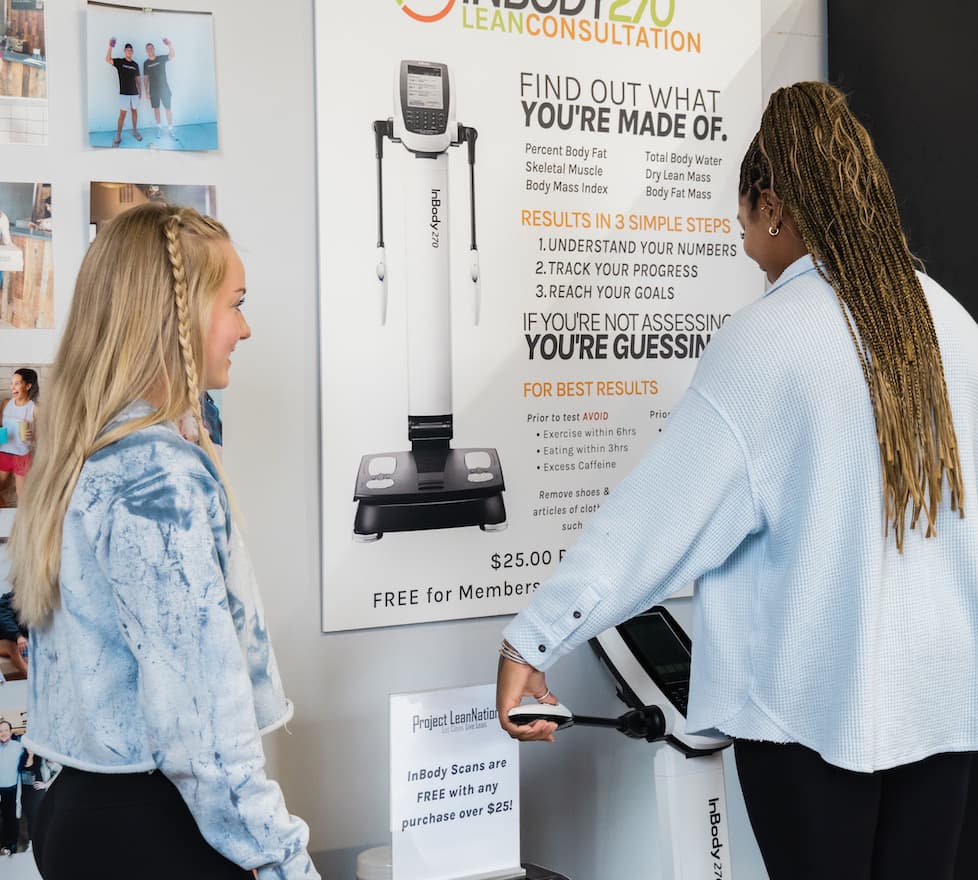
With PLN+, a coach can help you determine which meals, portion sizes and overall approach make the most sense for your goal. InBody body-composition scans can then help track how that approach is working over time.
So there are really two levels of personalization:
The meal level: you choose the foods and portion sizes that fit you.
The plan level: your coach helps you decide how those meals fit into the bigger picture.
For many people, that is more useful than having every individual recipe rebuilt from scratch.
Is Project LeanNation a bespoke meal-prep service?
No, and it does not need to be.
Project LeanNation is designed to provide choice and personalization while keeping prepared meals convenient, consistent and competitively priced.
You are choosing from a defined menu rather than commissioning a private chef. That lets the kitchen produce meals efficiently while still giving you control over what you eat and how much.
The personalization happens through the combination of meal selection, portion choice, coaching and progress tracking.
That is a different model from bespoke cooking, not a lesser version of it.
A necessary caveat
Project LeanNation is a nutrition retail and coaching business, not a medical provider.
If a diagnosed allergy or medical condition is the reason you need customization, review ingredient information carefully, ask the store about preparation and cross-contact, and work with your doctor or a registered dietitian when clinical nutrition guidance is needed.
See the menu and portion options at Project LeanNation's Atlanta-area stores.